
Echenda slaughterhouse and meat-processing equipment for pig, cattle and sheep lines
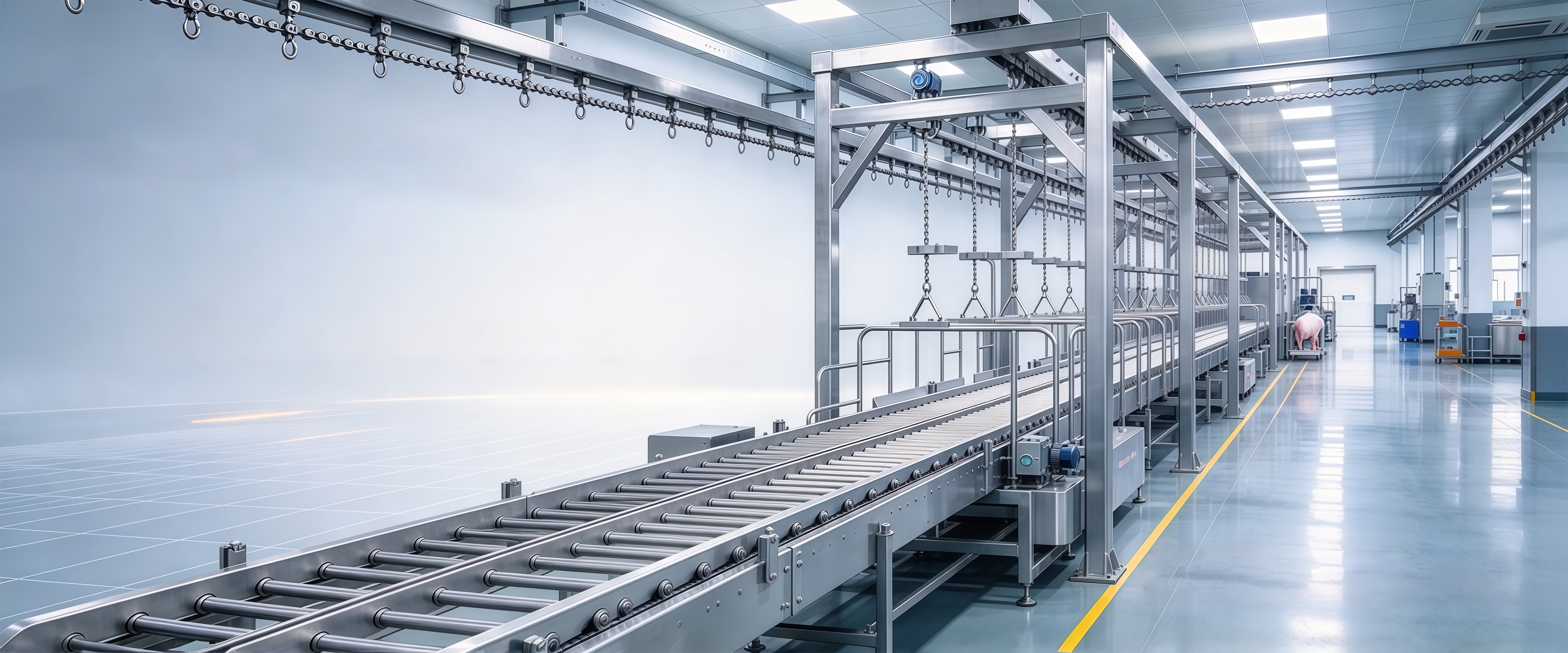
01 | Line planning
Plan the Complete Slaughter Line Around Your Facility
We start from your plant layout, required throughput and process route, then plan each stage of the line so the equipment fits the building and the workflow.
Explore Solutions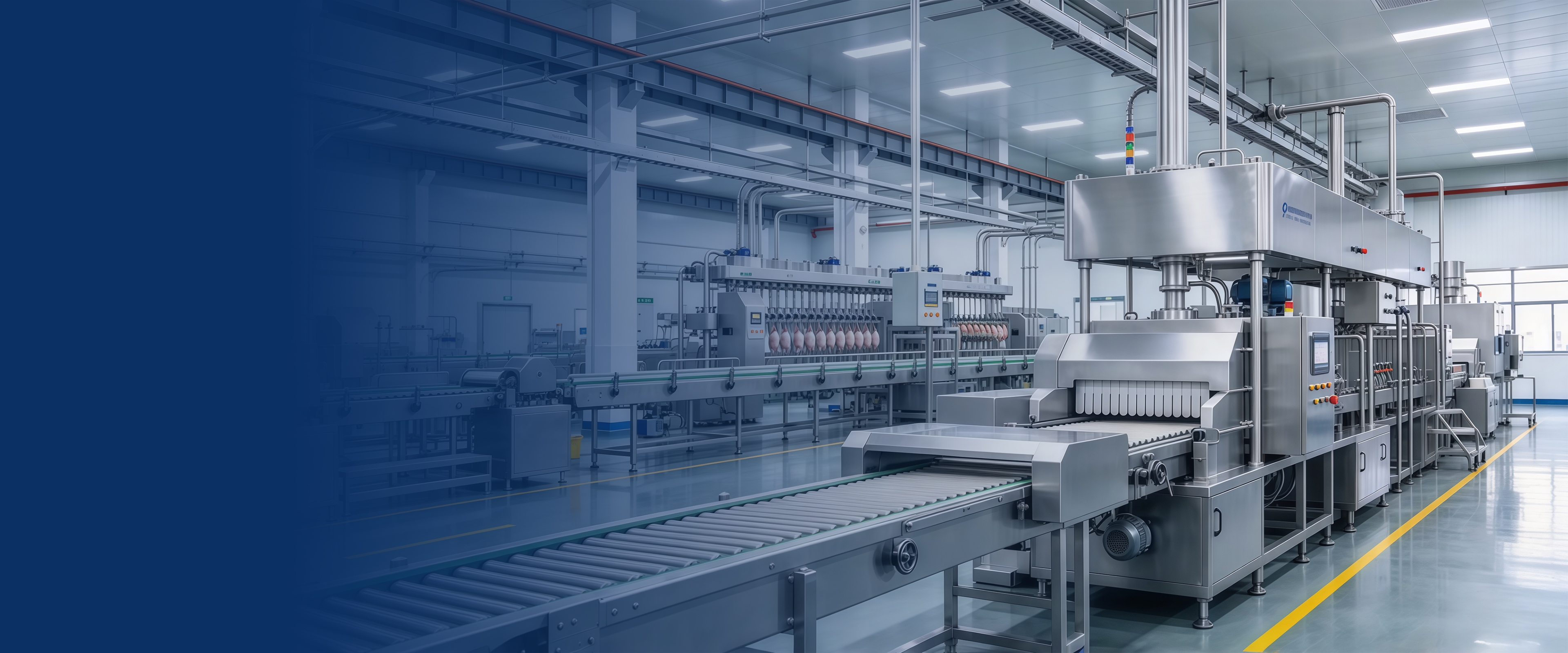
02Solution paths
Start from the animal, or from the machine
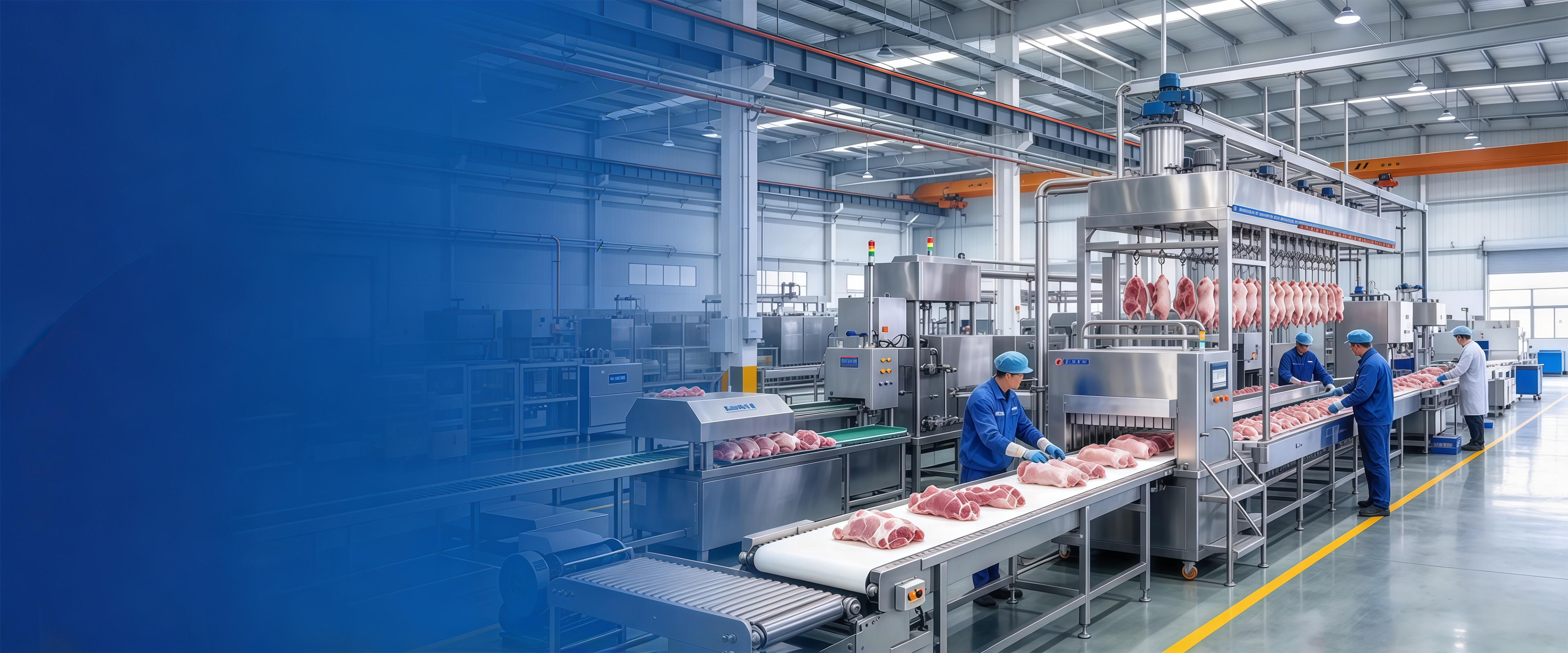
Each processing line follows a different route. Choose the species to see the stages, or go straight to the equipment you need.
Line 01
Pig Processing
Scalding, dehairing and dressing stages built around an overhead rail.
View process stages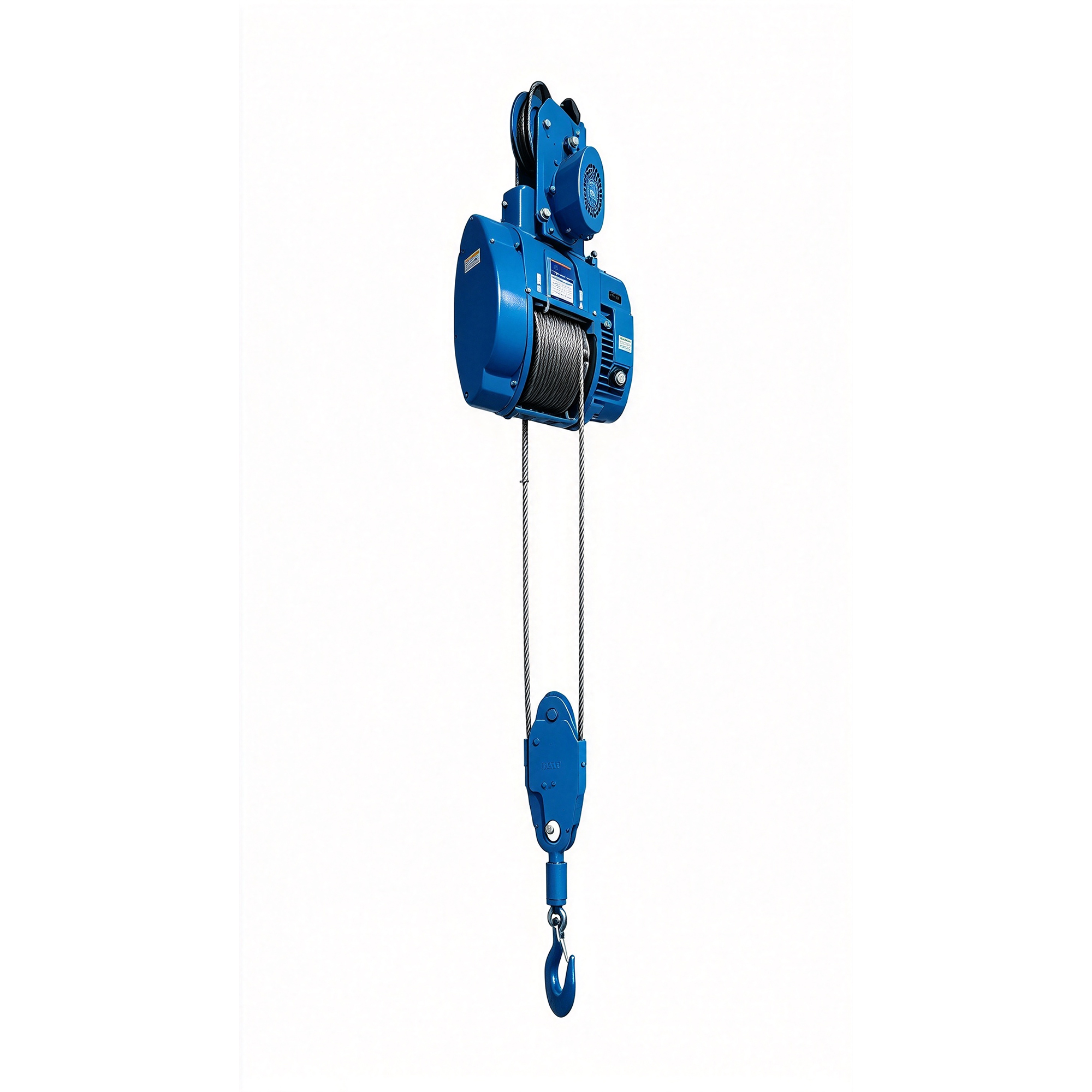
Line 02
Cattle Processing
Heavy-duty rail and dressing stations for larger carcasses.
View process stages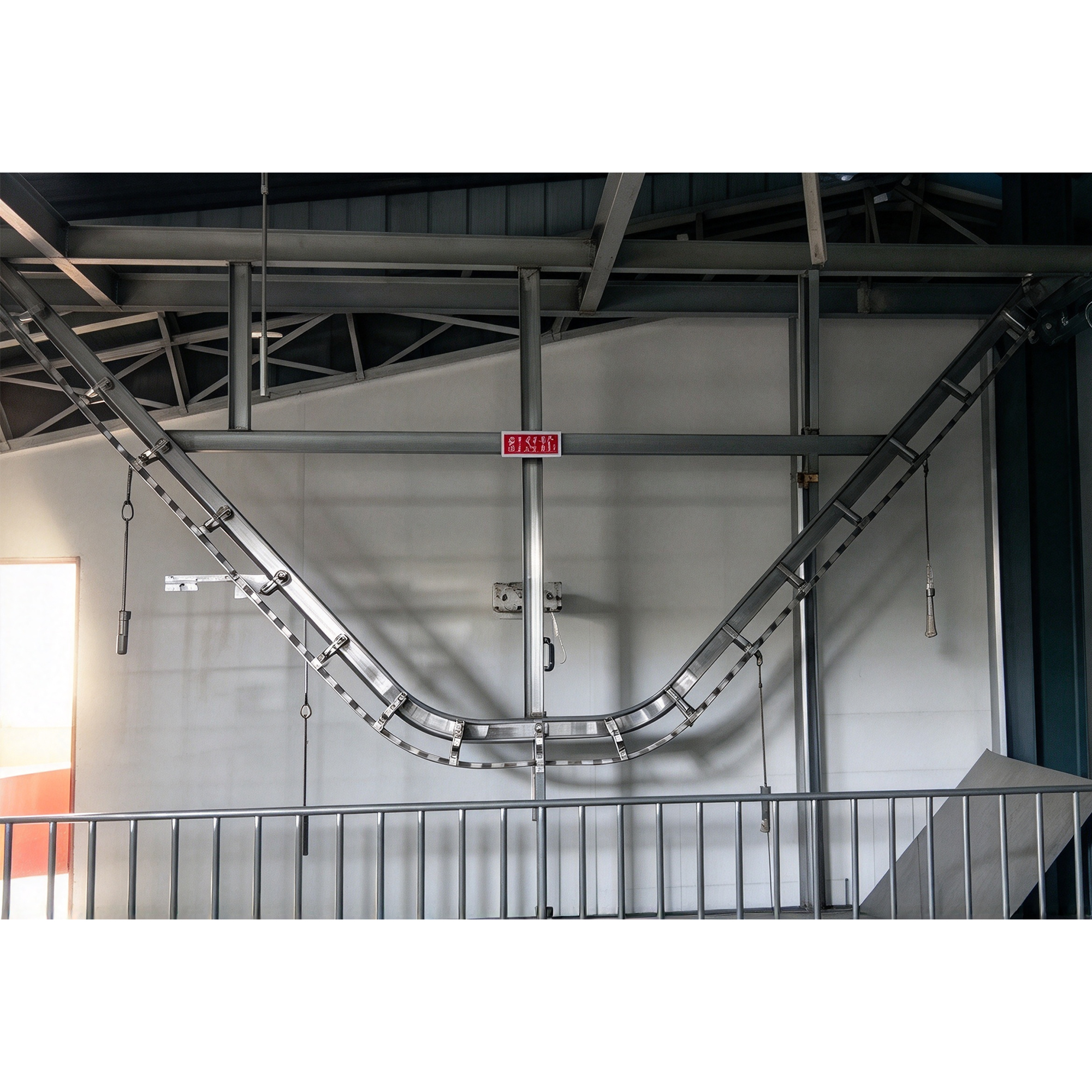
Line 03
Sheep Processing
Compact stations and rail routing for lighter carcasses.
View process stages03Featured equipment
Machines and rail for every stage of the line
A selection from the equipment range. Every item is quoted against your layout and throughput.
Rail Systems
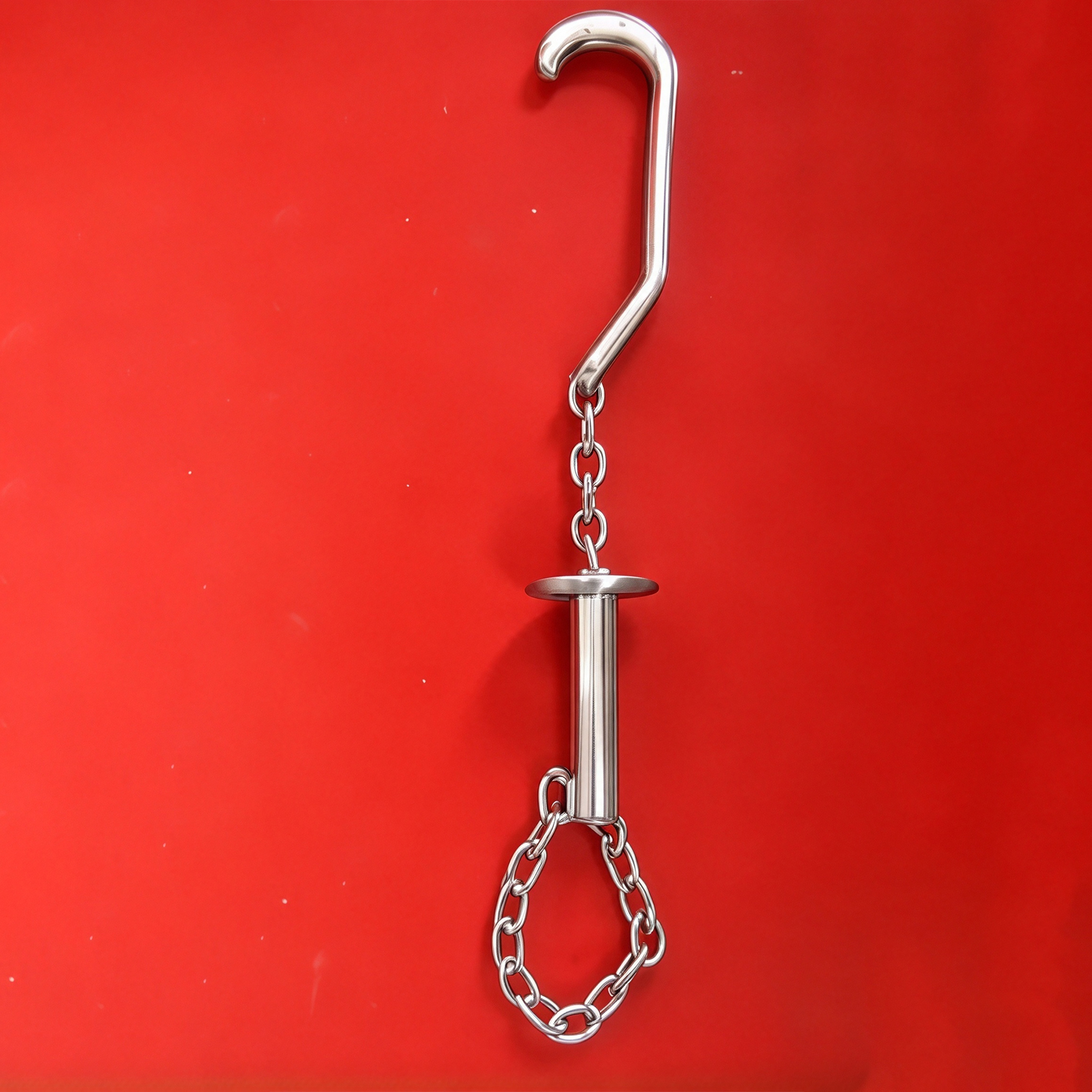
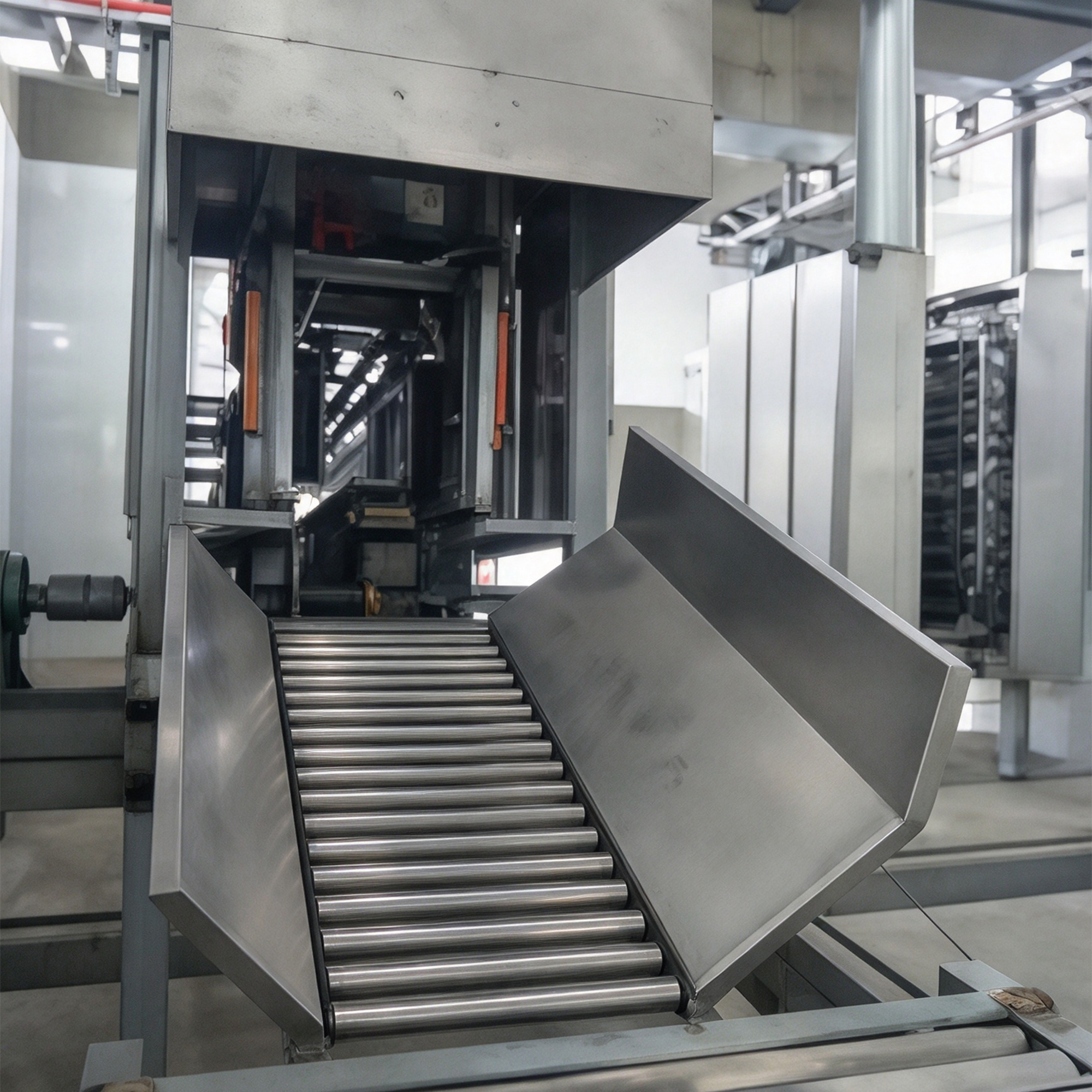
Bleeding Trolley Shackle Chain
Transfer carcass from horizontal bleeding table / live‑hanging conveyor to dehairer auto‑unhook; total length approx.880mm; stainless chain & sleeve
- Pig
Rail Systems
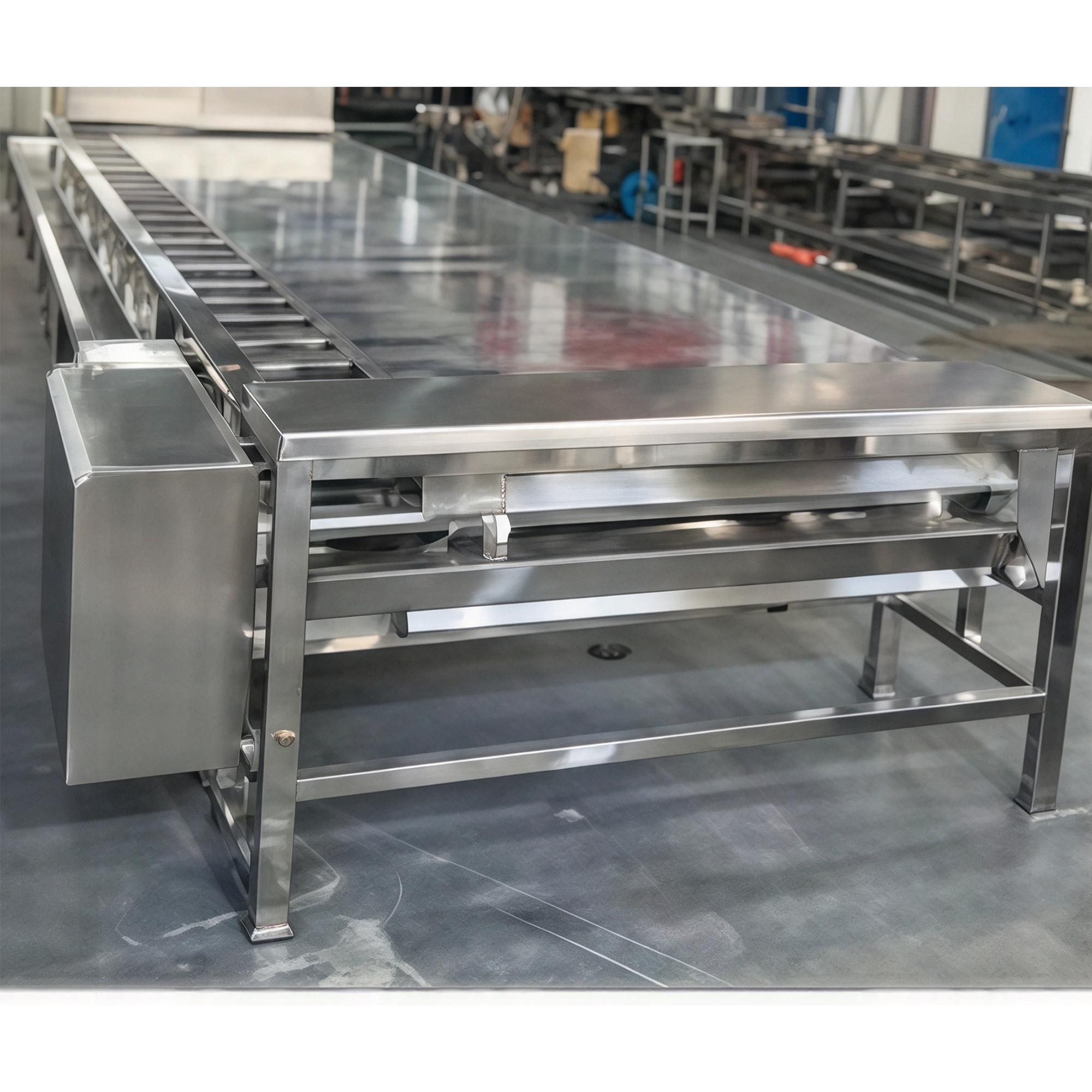
90° Stunner Roller Chute
nstalled at inlet of belly‑support stunning machine; guide stunned pig onto horizontal bleeding conveyor; 2‑mm 304 stainless steel plate; Ø38×2 stainless idle rollers
- Pig
Rail Systems
Horizontal Bloodletting Conveyor
Receive stunned pigs, transport through sticking station to shackling station; slat: 80×40 stainless rectangular tube; frame 40×40 /60×40 stainless rectangular tube; 2‑mm stainless blood collection tank; high‑strength chain pitch 100; motor 1.5kW with stainless guard; dimension 6000×1870×830mm; all stainless steel grade 304
- Pig
Rail Systems
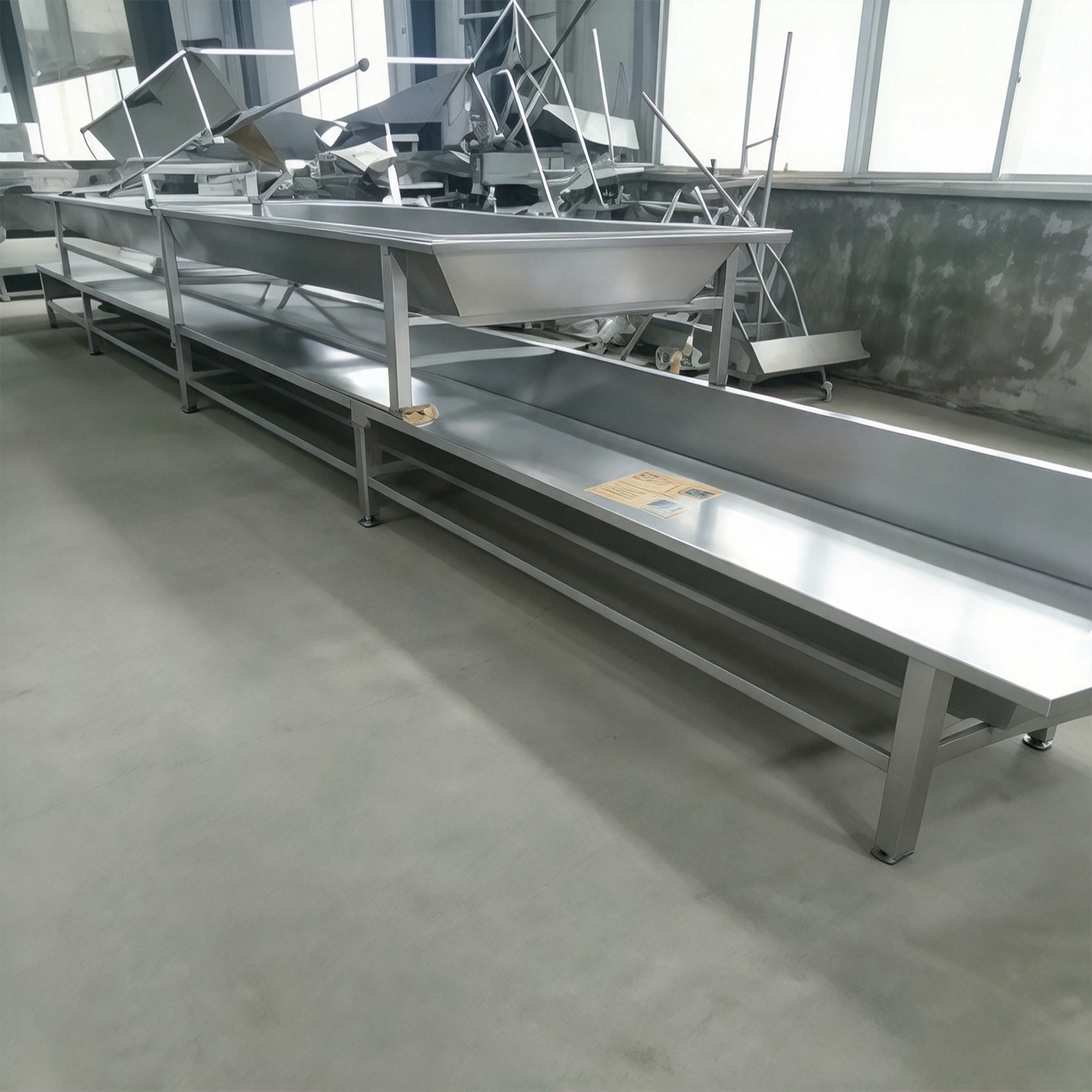
Blood Collection Tank
Fit into concrete pit; close drain during production, close blood outlet during cleaning; full stainless steel plate thickness 2mm; L≈8000mm, W≈1000mm, depth 250/500mm; concrete pit tiled, civil work excluded
- Pig
Rail Systems
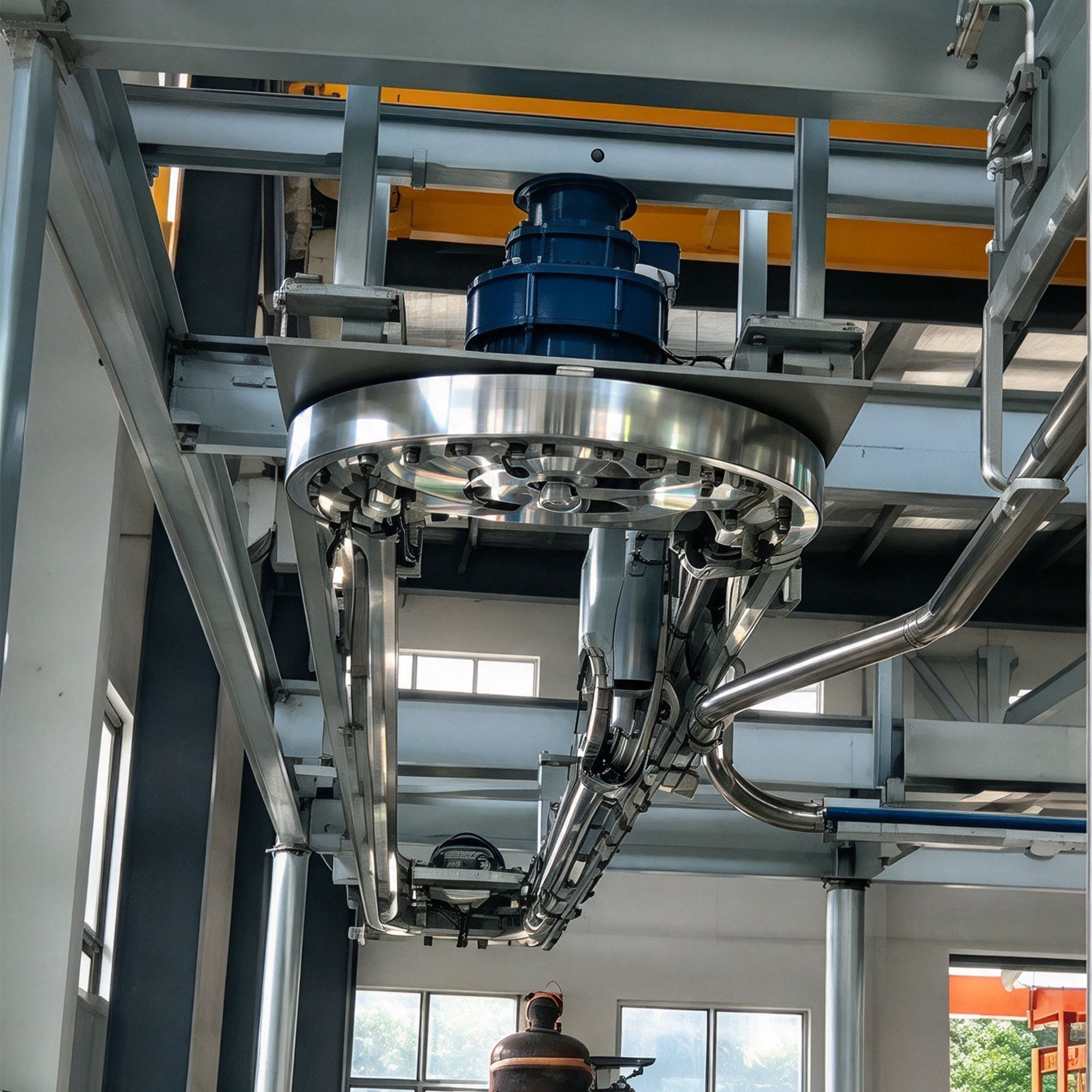
Drive Unit
Power unit for bleeding line; hot‑dip galvanized frame; base plate 12mm; double 8# channel steel track; motor 4kW with cycloidal pin‑wheel reducer; sprocket pitch 200mm, cast steel Z=9
- Pig
Rail Systems
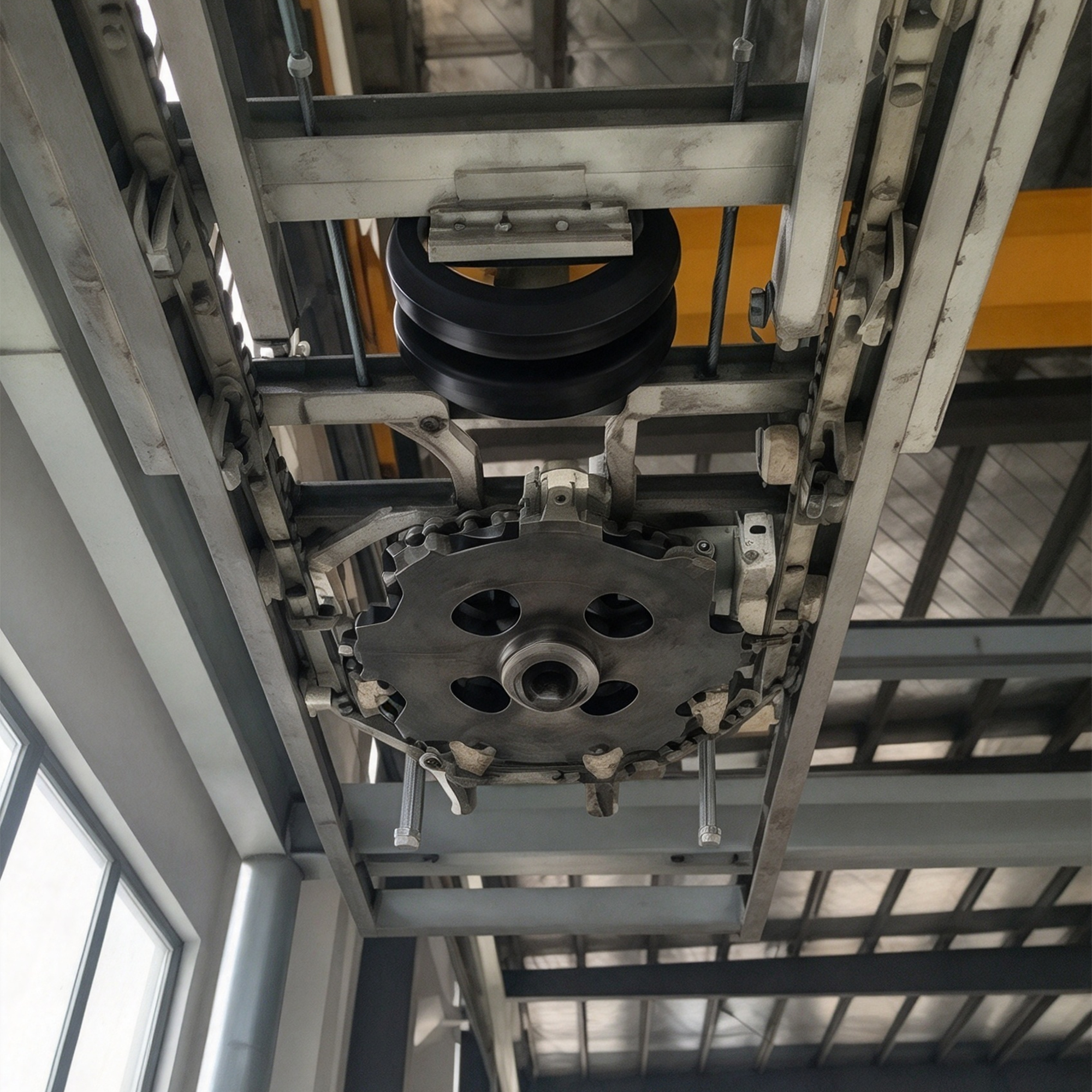
Tension Device
Tension unit for bleeding line; hot‑dip galvanized frame; double 8# channel steel track; air‑bag tensioner, solenoid valve & air filter regulator; domestic air‑bag; sprocket pitch 200mm, cast steel Z=9
- Pig
Filter by animal type and process stage.
04Process map
The slaughter line, stage by stage
Eight stages make up the line. Open any stage to see the equipment that belongs to it, across pig, cattle and sheep.
- 01
Conveying & Transfer
Moves animals and carcasses between stations along the planned route.
View equipment - 02
Stunning & Bleeding
Stunning and bleeding stations with collection planned into the line.
View equipment - 03
Scalding & Dehairing
Scalding and dehairing equipment arranged in sequence with the rail.
View equipment - 04
Carcass Processing
Splitting, trimming and dressing stations along the overhead route.
View equipment - 05
Offal Handling
Separate handling routes for offal and by-products.
View equipment - 06
Weighing
In-line weighing points planned into the rail and conveying route.
View equipment - 07
Hygiene & Sterilization
Washing and sterilization points for tools, hands and equipment.
View equipment - 08
Rail Systems
Overhead track, curves and switches that link every stage into one line.
Runs through every stage
View equipment
05Engineering & customization
A line engineered for your building, not a catalogue average
Every project starts with customized line planning according to the plant layout and the throughput the plant needs.
Layout-driven planning
Rail route, station positions and equipment footprints are drawn on your floor plan.
Throughput sizing
Equipment is selected against the head count per hour you need to process.
Stage-to-stage interfaces
Transfers between conveying, scalding, dressing and weighing are confirmed in advance.
Engineering review
Requirements are reviewed with you before the equipment list and layout are fixed.
Planning sheet
What we ask for
- Animal type
- Required throughput
- Floor plan and ceiling height
- Existing equipment
- Utility and drainage positions
What we return
- Line layout and rail route
- Equipment list per stage
- Interface notes between stages
- Project schedule for review
06Manufacturing capability
Built and assembled in Nanjing
Echenda equipment is produced by Nanjing Yichenda Food Machinery Co., Ltd. in the Lishui Development Zone.
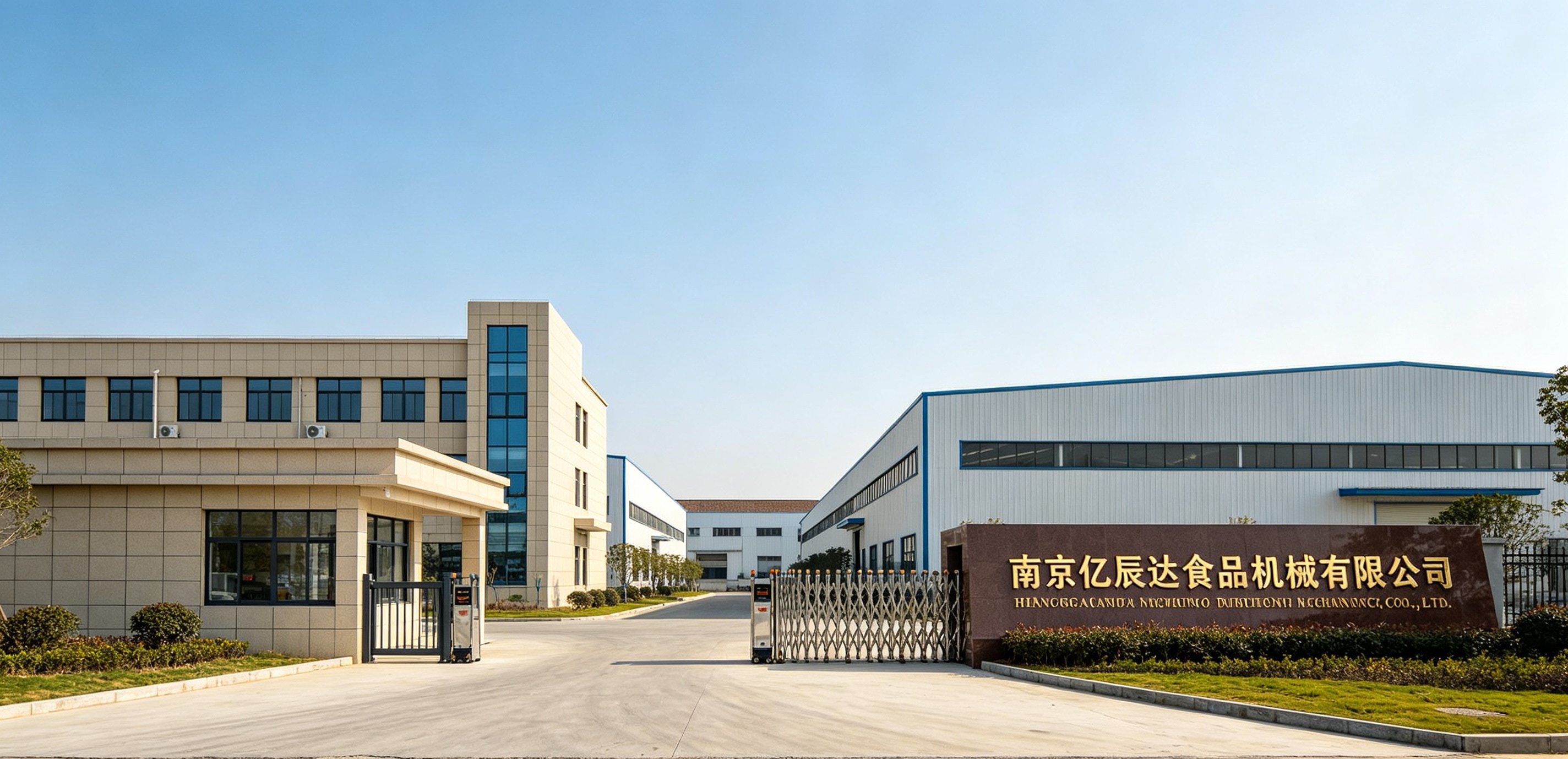
- 1,550 m²
- Manufacturing facility
- Equipment is manufactured and assembled in Nanjing, Jiangsu.
- 40–60 days
- Normal project lead time
- Depending on project scope. Your schedule is confirmed with the equipment list.
- Parallel
- Several projects at once
- Capable of handling several projects in parallel.
- Assembly
- Assembly and pre-commissioning
- Project assembly and pre-commissioning with progress updates at key production stages.
07Hygienic design
Designed to be cleaned
Hygiene is planned into the layout and the equipment from the first review. These are the points we work through with you.
- H01
Smooth stainless surfaces
Stainless steel panels and frames with continuous surfaces that are easier to wash down.
- H02
Open access for cleaning
Frames and guards arranged so operators can reach the areas that need regular cleaning.
- H03
Drainage-aware structure
Equipment positions are planned together with floor drainage so water does not collect around stations.
- H04
Separated routes
Carcass, offal and by-product routes are laid out apart from each other on the plant plan.
- H05
Sterilization points
Washing and sterilization positions for tools and hands are placed along the line, not left to the end.
- H06
Utility positions
Water, steam and power connections are confirmed with your plant services before production.
08Project approach
Six steps from requirement review to delivery
Each project follows the same sequence, so you know what is being decided and what you will receive at every point.
- Step 01
Requirement Review
Species, throughput, process route and existing equipment are reviewed first.
- Step 02
Plant Layout
Equipment and rail are arranged on your floor plan.
- Step 03
Equipment Selection
Each stage is matched with equipment for the species and the line speed.
- Step 04
Production & Assembly
Equipment is manufactured and assembled as one project.
- Step 05
Pre-commissioning
Connected sections are checked together before delivery.
- Step 06
Delivery Preparation
Packing, documents and delivery arrangements are prepared with you.
09FAQ
Questions buyers ask first
Short answers on planning, lead time and what to send us.
What kind of equipment does Echenda supply?
Slaughter and meat-processing equipment for pig, cattle and sheep lines: conveying, stunning and bleeding, scalding and dehairing, carcass processing, offal handling, weighing, hygiene and sterilization, and overhead rail systems.
Can the line be planned around my existing plant?
Yes. Line planning starts from your plant layout and the throughput you need. Floor plan, ceiling height, drainage and utility positions are reviewed so the equipment and rail route fit the building.
What information should I send with an inquiry?
The animal type, required throughput, a floor plan or layout notes, and the stages you need equipment for. Not all of it is required to start; we will confirm the rest during requirement review.
How long does a project normally take?
Normal project lead time is around 40–60 days, depending on scope. The schedule for your project is confirmed once the equipment list and layout are agreed.
Do you assemble the equipment before delivery?
Project assembly and pre-commissioning are part of our engineering process, so connections between stages can be reviewed before delivery. Progress is shared at key production stages.
Can I order a single machine instead of a full line?
Individual equipment can be quoted. Tell us how it has to connect to the rest of your line and we will confirm the interface with you.
What technical support is provided?
Technical support scope is confirmed per order.
10Contact
Send your requirements, we will plan from there
Share the animal type, throughput and layout notes you have. Our engineers review every inquiry.